Tuesday, 26 April 2011 09:13

Polk Wants To Call Haddow As Witness in Ray Trial

Written by 
Rate this item
(2 votes)
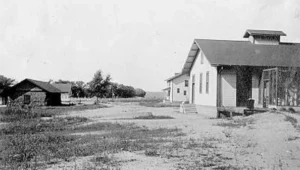
Polk Decides to Call Haddow as a Prosecution Witness, Defense Protests

Update: At this point, it appears that Polk will not be allowed to call Haddow as a witness.


Last Friday, County Attorney Sheila Polk, in her role as Prosecutor, sent notification to James Ray's attorneys by fax, "The State is providing notice that it intends to call Mr. Haddow as a witness. The State anticipates calling Mr. Haddow following the testimony of Amyra Hamilton."

James A. Ray is on trial for manslaughter, following a Spiritual Warrior Retreat, which culminated in a deadly sweat lodge event. Three people died, and several more were taken to the hospital on the night of October 8, 2009. Ray was the facilitator of the Retreat and the sweat lodge.

Polk's notification caused an immediate response from the Defense team, who, the first thing Monday morning (April 25 at 9:44 am) filed a motion to pdf Exclude - Preclude   seeking to prevent the testimony of Richard Haddow for the following reasons:

  • "The State's attempt to call Mr. Haddow as a witness at this juncture is late and improper."
  • The letter faxed to the Defense, "...does not state whether Mr. Haddow will testify as an expert, on what topics the state may seek to qualify him as an expert, or to what opinions he will testify."
  • "Permitting Mr. Haddow to testify would prejudice the Defense and infringe Mr. Ray's Sixth Amendment right to a fair trial because the State has deprived Mr. Ray of the opportunity to investigate and test Mr. Haddow's complex scientific analyses."
  • "Haddow admitted that his opinions are incomplete and preliminary."
  • "A hearing and full briefing would be necessary to determine Mr. Haddow's qualifications as an expert. As the State itself has acknowledged, there are significant questions as to whether Mr. Haddow, who is neither an environmental engineer nor a medical doctor, can properly opine as an expert in many of the topics of his report."
  • "Mr. Ray cannot adequately respond to this new theory at this juncture."

Why Does the Defense Care?

A motion for a mistrial was filed in the James A. Ray manslaughter case about two weeks ago. At issue was an email from Rick Haddow of Haddow Environmental Research Organization, dated in April 2010, in which other possible causes of death are suggested.

See: Motion for Mistrial in James Ray Case; Oral Arguments on Wednesday

The grounds for the mistrial motion were that the State, represented by the Yavapai County Attorney's office, withheld the Haddow email, despite several requests for the information. In the 41-page motion, the defense wrote, "The Defense has just learned of a constitutional violation that eclipses all other issues that have been litigated in this trial. For the past eleven months, the State has suppressed material, exculpatory evidence. The evidence - an expert witness report prepared by an environmental scientist at the State's request - identifies a different cause of death and a differeent culpable party than those which the State has alleged throughout this case. This amounts to a severe violation of Brady v. Maryland, Arizona Rule of Criminal Procedure 15.1(b)(8), and Due Process. The trial's entire trajectory has been infected, and the Court and jury misled, because of the suppression. The prejudice to the Defense cannot be cured. Under clearly established law, a mistrial must be granted and retrial barred."

During the Oral Arguments, Defense Attorney Luis Li, stated that if they'd had this information, they would have conducted their defense of Ray in a completely different manner. "My opening statement would have been different. Cross examination of every witness would have been different..."

Part of the Prosecution's response to the motion for mistrial included a statement that the Haddow material was not exculpatory, as the defense claimed, but inculpatory. Darrow disagreed, stating that the information was clearly exculpatory.

Furthermore, Judge Darrow agreed that there had been a Brady Violation, stating,

"In concluding that the late-disclosed information is material, the Court notes that the expert's preliminary report is not cumulative. Furthermore, the late disclosure could prejudice the Defendant's ability fully to present a defense. Under these circumstances, the evidence in question must be deemed material for purposes of Brady analysis."

Darrow continued, "Although the previously undisclosed evidence is material, the Court notes that the Defendant still has an opportunity to present to the jury the favorable information contained in the Haddow report. That information appears to be consistent with the defense being presented at trial, as was articulated by counsel at oral argument on the motion for mistrial. Furthermore, circumstances regarding the late disclosure can be the subject of cross-examination of both future witnesses and witnesses who are recalled to testify.

"At the present time, the Court concludes that mistrial is not warranted under Brady or Rule 15.7 of the Arizona Rules of Criminal Procedure. Therefore, IT IS ORDERED denying the motion for mistrial."

See pdf Order Under Advisement Ruling 2   

'I Do Find a Brady Violation' Says Judge Darrow

A Long Break

After this ruling, the Defense asked for time to research this matter, which Judge Darrow reluctantly granted, recessing the trial from Thursday, April 14, until Wednesday, April 20. Upon returning, Debra Mercer, a former employee of Angel Valley, where Ray held his Spiritual Warrior retreat, and subsequent sweat lodge, continued her testimony. Michael Hamilton, owner of Angel Valley followed Mercer on the stand.

The first day back, Tom Kelly, Ray's local defense attorney, casually mentioned that the defense did not intend to call Haddow, noting that he was not disclosed in a timely fashion as a witness in the case. "We understand your Court order. He can't testify," Kelly said.

Darrow replied in bemusement, "I didn't say he could not testify if the defense chose to call him."

Kelly replied, "Well, Judge... I understood a clear order from the court a couple of weeks ago that the time for investigation has ended. And... if we're provided the option of calling him, I appreciate that, but as we stand here today I don't want to mislead the court. We had the chance to interview him but we don't intend to call him."

Darrow reiterated his willingness to allow the Defense to call Haddow, and also pointed out that the Haddow information cannot be referred to without a proper foundation. Sheila Polk, Yavapai County Attorney, agreed with the judge. "The only way he can prove it is by bringing in Mr. Haddow. He has to have a good faith basis that he can prove up the information that he's trying to give the jury. He can only prove that by calling Mr. Haddow," Polk stated.

But, the defense has, so far, been steadfast in their refusal to call Haddow.

An Interview With Mr. Haddow

The first thing that's evident in the transcript of the Haddow interview provided to the Court, dated April 15, 2011, is that he has one major focus on his mind. He wants a job, or at least some sort of payment.

See the Motion to pdf Exclude - Preclude 

Truc Do, a member of the Defense Team, after thanking Haddow for his patience, states, "...what we've done, is we've agreed both sides will split the 4,375 for your work product. We are going to submit the issue to the court to make sure the, that's what the court is going to decide, but the bottom line is, it is covered and the parties will split if that's decided..." (page 12)

Haddow replies, "Are you saying that the judge says that ----"

Do answered, "The judge could say the State could bear the cost, the State, or the defense could bear the cost."

Haddow said, "Okay. Not, nobody has to pay me [laughter]."

"...it was, I'm trying to be as tactful but I was also trying to garner some work," Haddow explained to Do.

"It was all... you know... it was all if in fact I could help I would like to look for a job," Haddow stated some time later, adding that he sent them a blank retainer agreement, which the State didn't ever return, and that prosecutors questioned his credentials.

Again, "Trying to get a job... I was trying to sell myself," Haddow admitted.

Do referred to Prosecuting Attorney Bill Hughes' notes from a June, 2010 telephonic conversation, in which Hughes wrote, "...says he charges $125 an hour. He can be flexible with it. He works with a $4000 retainer."

Haddow's Qualifications

It's also worthy of notice that although Haddow sounded knowledgable, he apparently does not have an engineering degree. Haddow states, "As a private investigator licensed by the State of Arizona I can conduct investigations and collect information from, with a law firm and take some information."

In discussing his qualifications with Do, Haddow agreed when Do asked if he, "...began environmental air quality experience on board submarines..."

He got more specific later, stating, "I'm not an environmental engineer. I'd be considered an environmental scientist."

Haddow's Dealings With the Prosecution Team

Also, although there were many 'contacts' between Haddow and Detective Ross Diskin, most of the time the contact was initiated by Haddow, trying to get information from Diskin. Some of the 'contacts' were simply messages that Haddow left for Diskin. Some of the notes indicated assumptions of what the Sheriff's department would do for him, and those assumptions were not fulfilled. As an example, Haddow assumed that he could get Detective Diskin to take him to the crime scene. That didn't happen. Haddow was actually hoping to receive information from Diskin, who was understandably careful about what he offered.

"You know, we've had a few phone calls, and it was generally it was trying to find out what information they had that would help me..." Haddow stated. (page 39)

"...sometimes I would call and let him know what I was doing, also fishing for info, possible answers to more questions, and stuff like that, so, if there's any additional information that I could garner from him..." (page 52)

Do asked, "...did you feel that like the information street was one way where you were just calling and getting information or did he give you any indication that he was also interested in what, if anything, you found?"

"I would only just suspect that he was interested in what I was trying to find... they never shared anything about their process or anything on that," answered Haddow.

Haddow admits he never saw the actual sweatlodge structure, he formed his opinions and analysis based on written documentation and photographs. In February, Haddow received a disk from Diskin with interviews and site dimensions. Furthermore, some of the information he received was inaccurate, "Apparently, after all this got done, apparently his, his site map is wrong and the direction of north is wrong, and so a lot of my findings are incorrect... apparently it's, it's skewed, so thate location of the entrance and where the victims were, I was describing based on his drawings... It is, it is incorrect," Haddow explained. (page 50)

Haddow went into a great deal of detail regarding what he believed led to organ failure in Liz Neuman, a victim who died 8 days later. Towards the end, Haddow emphasized, "...the report is focused on Liz and not everybody... that's one of the reasons why it was incomplete. I don't - tht's the reason I called it a preliminary reporet, because I didn't have all the facts. I didn't have the materials, I didn't get the rocks, I didn't get to calculate the heat and what they were experiencing. There's just a ton of stuff that I didn't do. I only spent like, less than a week on it."


Polk has not yet responded directly to the motion to exclude the testimony; and Judge Darrow has not ruled at this time. Trial resumes Tuesday morning.

Additional Info

blog comments powered by Disqus

If Andy Tobin Runs for Congress, who would you vote for in the primary?