After months of turmoil and controversy, the Arizona Independent Redistricting Commission (AIRC) has published the map options for Legislative and Congressional districts on Saturday.
Five people are on the Redistricting panel: two Democrats, Vice Chair Jose M. Herrera, LInda C. McNulty; two Republicans, Vice Chair Scott Day Freeman, Richard P. Stertz; and one Independent, Colleen Coyle Mathis, who is also the Chairman.
During this time, questions have arisen about the 'independence' of Commissioner Mathis, the choice of the mapping company, the AIRC handling of Open Meeting Laws. As a matter of fact, Arizona State Attorney General Horne announced on July 21, 2011 that he was authorizing a probe into the AIRC, stating, "I need to emphasize very clearly that this is an initial investigation that will attempt to determine if any violations actually occurred. I am concerned about reports that have raised questions about some of the procedural actions taken by the commission, and I am committed to finding out whether those concerns warrant any further investigation. If this initial investigation finds that laws have been violated, we will proceed accordingly."
Despite considering whether or not they should cooperate with the Attorney General's office, the Commission finally put out a press release on August 5 announcing it, "...has been, and will continue, cooperating with the state attorney general as he pursues his open meeting law and procurement investigation. Chairman Colleen Coyle Mathis stated: “In order to instill public confidence in the process and to put this matter behind us, I look forward to answering questions and will continue to fully cooperate with the inquiry."
Since the middle of July, the commission has traveled to 23 different communities putting on public presentations and listening to comments. During those meetings, 1139 people signed in to signify their attendance, and 639 requested to speak to the commissioners, according to the AIRC website. (Prescott and Cottonwood held a joint teleconference the evening of July 28, and between the two communities, over 150 came, and 37 spoke.)
Now the results of all those meetings are bearing fruit, as evidenced by the four maps produced by Strategic Telemetry which pertain to both the Legislative and Congressional districts. It's likely that turmoil and controversy will continue as people weigh in with their opinions on the matter.
First Discussions
On Wednesday, August 17, the AIRC will meet at the City of Phoenix City Council Chambers at 1:00 pm.
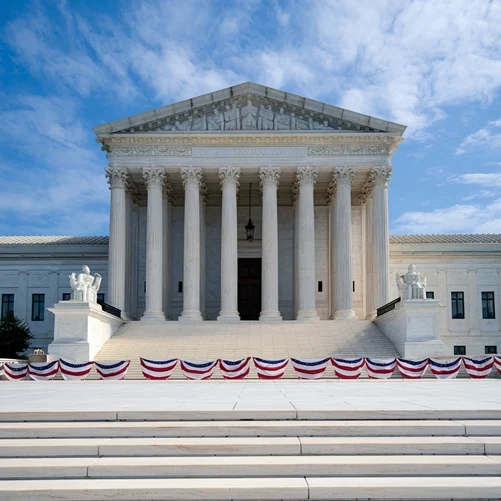
On that agenda, Supreme Court Justice Sandra Day O'Connor will address the AIRC. There will be a variety of business items to consider, and the very last item on the agenda is, "Call for Public Comment. This is the time for the public to comment on items on the agenda or redistricting maps."
These Aren't the Final Maps
The maps on the AIRC website are vague, and although these maps do show county boundaries, they aren't very clear as to which cities are in which district.
Here's how the AIRC describes the methodology:
"Per the commission's direction, we have prepared two versions of both the congressional and legislative grid maps. The first versions of the grid maps start at the densest block in the center cell of the grid and proceed counter-clockwise... The block is found at the intersection of W Montebello Ave and N 59th Ave in Glendale.
"The second versions of the legislative and congressional grid maps begin at the southeast corner of the state and proceed clockwise."
Furthermore, once the Commission has chosen the final two maps, they will be adjusting boundaries in order to meet as closely as possible the complete list of redistricting requirements. They write, "As discussed previously, the grid maps do not attempt to meet any criteria other than compactness and equalpopulation."
We provide the eNewsAZ analysis of each of the maps below, in an imperfect effort to understand which cities and towns in Yavapai County will reside in which district. What we did was to take the AIRC map and overlay it on a regular map of Arizona. Then we traced the approximate boundaries for areas of Yavapai County which might be affected.
Please note, this is the best we could determine at this point of time, and the map data is certain to change.
Legislative Option 1
This puts most of Yavapai County in the center of the map.
District 15: Prescott, Prescott Valley, Camp Verde, Jerome, Wickenburg - possibly Payson, Chino Valley, Paulden (it's not clear)

Legislative Option 2
This would apparently divide Yavapai County into three (or more) districts.
District 5: Bullhead City, Mohave Valley, Lake Havasu City, anything west of Prescott and Prescott Valley.
District 6: Williams, Seligman, Flagstaff, Sedona, Jerome, Camp Verde, Cottonwood - possibly Chino Valley, Paulden.
District 14: Prescott, Prescott Valley, Wickenburg - possibly Surprise, Peoria

Congressional Option 1
This would put most of Yavapai County in the middle of the map.
District 6 (the Center) includes: Prescott, Prescott Valley, Jerome, Camp Verde, Payson, Show Low, Holbrook, Sedona, Apache Junction, Globe, - possibly parts of Scottsdale, Mesa, Gilbert, Chandler (the map makes it really hard to tell)

Congressional Option 2
This would divide northern Arizona into two halves.
District 4 (the Western half) includes: Prescott, Prescott Valley, Camp Verde, Flagstaff, Williams, Kingman Bullhead City, Page Spring, Grand Canyon, Tuba City.

RSS Feed
Facebook
Twitter