Recent comments on the Opinion page of the Daily Courier asserted that the Arizona Department of Water Resources (ADWR) and local governments have done little to reach safe-yield by 2025 in the Prescott Active Management Area (PrAMA). The City of Prescott disagrees. Prescott has been and continues working on its own efforts to reduce reliance on groundwater; however, very little acknowledgement has been given in the local media to its accomplishments.
The 1980 Groundwater Management Act (GMA) created four AMAs, including the PrAMA. The GMA also set a goal of reaching safe-yield of the aquifers within AMAs by 2025. Safe yield balances the amount of groundwater withdrawn from an aquifer with the amount of natural and artificial recharge into the aquifer.
By state law, achieving safe-yield is ADWR’s responsibility; there is no direct delegation or apportionment of this responsibility to any water provider or user within the PrAMA. ADWR imposes conservation requirements on water providers, creates incentives to use and recharge recycled water, and places limits on groundwater access and use. Each measure is intended to bring the AMA closer to reaching safe-yield.
Prescott's efforts to reduce reliance on groundwater began in the 1980s, even though the PrAMA was not determined to be out of safe-yield until 1999. For example, in 1988, Prescott became one of the first municipalities to treat and recharge effluent to offset groundwater pumping. Prescott also pursued the purchase of surface water rights from the Chino Valley Irrigation District in Willow and Granite Creeks, which feed into Watson and Willow Lakes, eventually adding more than 1,300 acre-feet/year of renewable surface water to its water portfolio, further reducing Prescott’s dependence on groundwater.
ADWR’s Third Management Plan for the Prescott AMA 2000-2010 states that achievement of safe-yield by 2025 is dependent upon four conditions: significant water conservation by cities, towns and private water companies; reduction of groundwater use for turf and increased use of effluent; use of other renewable supplies; and Big Chino groundwater importation. ADWR further stated in 2004 that “[a]chievement of the safe-yield goal without a source of imported water supply is doubtful, if not impossible, given groundwater requirements to meet the needs of current residents in addition to the groundwater commitments extended to pre-declaration subdivisions that are still to be built.”
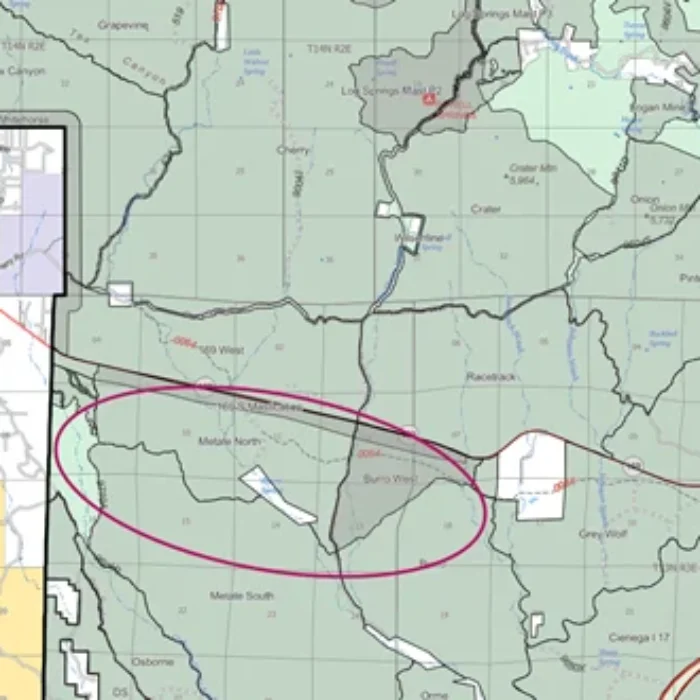
The PrAMA’s need for additional water has been recognized for some time. In 1991, the Legislature granted Prescott the explicit right to import up to 14,000 acre-feet of groundwater from the Big Chino sub-basin in exchange for facilitating the settlement of two Indian water rights settlements and transferring its allocation of Colorado River water to the City of Scottsdale. In order to exercise its property rights to this water, Prescott conducted extensive hydrologic studies of the Big Chino Sub-basin, finally determining that a well field located at the Big Chino Water Ranch would provide a secure supply of groundwater for the PrAMA while minimizing the potential to impact the Upper Verde Springs 20 miles from the Ranch. In 2005, the Prescott City Council also passed a resolution reserving the amount of water Prescott could import from approximately 1,100 acres of historically irrigated acreage on the Big Chino Water Ranch, equaling nearly 3,300 acre-feet per year, to augment safe-yield or to mitigate any measurable impacts to the Upper Verde from Prescott’s pumping.
Recognizing the critical role conservation plays in achieving safe-yield, Prescott employs numerous water conservation measures, including a full-time coordinator, conservation incentives, and a tiered water rate structure. The City’s water management policies and codes also contribute to reducing reliance on groundwater. Successful water management tools include: a conservative water allocation budget; time of day watering restrictions; expanded use of effluent; and a consistent meter replacement program. Prescott residents’ response to these measures has resulted in a 15% per-person decrease in water use since 2003, even though the City’s population has increased 13%. And, even though 8,200 housing units have been built since 1992, less groundwater was pumped in 2008 due to the expanded use of alternate water sources! Reduced water demands also saves money for the City and its citizens by reducing operating costs to treat and deliver water.
The City of Prescott is not the only entity working towards safe-yield. Prescott and other PrAMA communities belong to many state- and county-wide committees that are also joining together to try to develop solutions that will work for all water users and providers to reach safe-yield. Our local legislators have also introduced and passed legislation that requires development outside of AMA’s to follow some of the same rules AMA communities must follow. Yavapai County has also placed restrictions on the ability to develop without an assured water supply.
Achieving safe-yield is a complex long-term process. While the efforts of Prescott and other water providers have reduced per capita use, aquifer overdraft is still occurring. This is due in part to the approximately 10,000 unregulated wells within the AMA. Each of these "exempt" wells may withdraw up to 56 acre-feet per year! Prescott sent a resolution to the legislature requesting the State acknowledge its responsibility to engage well owners in the process. Until these water users are included in a safe-yield solution, it will be very difficult to achieve.
Safe-yield is important for the long-term availability of adequate, high quality water for PrAMA communities. Prescott remains committed to working with ADWR and other PrAMA parties to achieve safe-yield.
Contributors to this article include Rita Maguire, former Director of ADWR, and Jim Holt, former Director of the PrAMA.
RSS Feed
Facebook
Twitter